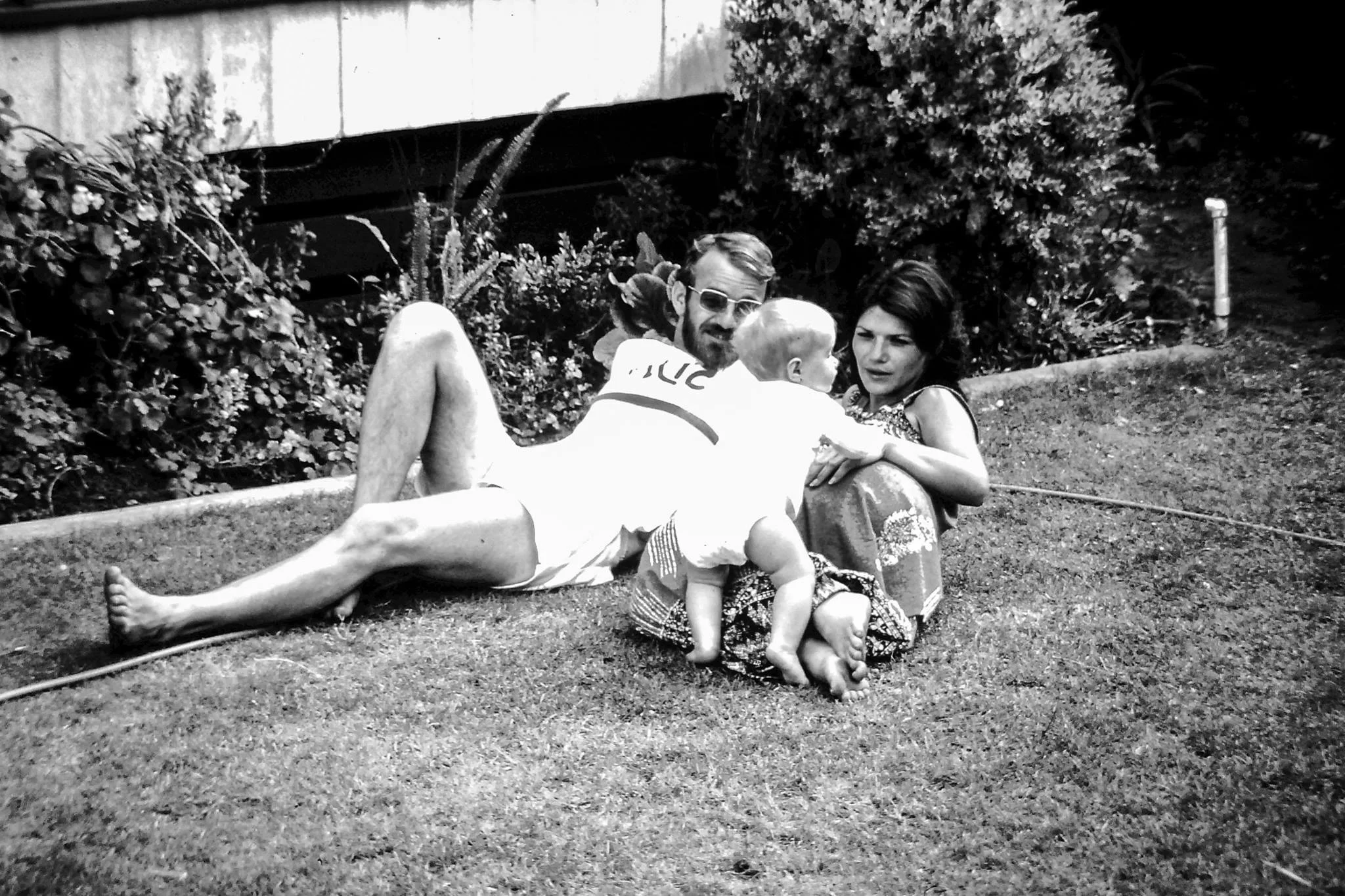
My dad, John, my mum, Claudia, and me, when I was small.
In my early twenties, I lost both my parents to lung cancer within five years of each other.
I was present through their illnesses, and at their deathbeds.
We were a close-knit family. We loved and supported each other. We also carried intergenerational trauma, and couldn’t always say what needed to be said.
Grief was complicated by silence around my dying parents’ needs, and unspoken shifts in the family dynamic. My dad wrote down his wishes for cremation in a family history he was compiling, but we only found it after we had buried him. Mum was more vocal about her needs, but I often heard her self-advocacy as criticism.
At that time, I didn’t know how to hold my own experience in a way that left enough room for theirs. I didn’t know how to ask for help. I was lucky for the generous support of my non-blood kin, including neighbors and chosen family who showed up for my brother and me during Mum’s transition, who fed us and held the logistics so we could simply be present. I still felt awfully alone.
After each death, I tried to move past my grief by pushing it away, alternating between responsibility and avoidance, and telling myself I should be over it. I’m still working through what I refused to feel then. I’ve come a long way, and I’m still learning.
Looking back, I wish my family had a death doula to walk alongside us. Someone who could help my parents identify and advocate for what they really wanted and needed, without the fear of burdening those they loved. Who could demystify the dying process for us, and helped us be more intentional about what a good death meant for my parents. Who could support us as we managed complicated family relationships. Who could sit with us to meet our grief in ways that supported integration and wholeness. And who could empower us to mobilize the practical and relational care that would have allowed us all to stay present with each other.
That is what I strive to offer now as an end-of-life doula.